
Physiotherapy begins
A physical therapist teaches you exercises, such as contracting and relaxing certain muscles, that strengthen the artificial hip. The new hip has a limited range of movement at first, so you also learn safe ways to bend and sit.
Learn how hip replacement works, what recovery looks like, and see real patient videos and before and after results from cases treated by Dr. Chandresh Sharma at Lifeline Hospital, Ahmedabad.
The hip is a ball and socket joint. The ball at the top of the thigh bone (femur) fits into a cup-shaped socket in the pelvic bone. In a total hip replacement, the surgeon removes the damaged bone and implants an artificial hip (prosthesis) to replace both the ball and the socket.
Before recommending surgery, we usually advise non-surgical treatment such as medicines and physiotherapy. Unfortunately, these do not relieve pain and improve hip function in every patient. Hip replacement becomes an option when persistent pain and disability interfere with daily activities.
The surgery takes one to two hours and carries minimal anesthetic risk. The arthritic parts of the joint are removed and the ball and socket are replaced through a surgical incision. A minimally invasive approach works through small incisions. The artificial components are made of metal alloys with a high-performance bearing surface, usually durable polyethylene plastic, though ceramic and other materials are also used.
After surgery, most patients spend a few days in the hospital, where they benefit from rehabilitation facilities and guided exercises.
Physical therapy typically starts the day after surgery. Here is what the road back usually looks like.
A physical therapist teaches you exercises, such as contracting and relaxing certain muscles, that strengthen the artificial hip. The new hip has a limited range of movement at first, so you also learn safe ways to bend and sit.
Most patients walk with the support of a walker or crutches while the new joint settles in.
Most patients then move on to a cane for another four to six weeks, gaining strength and confidence.
After that, the majority of patients walk freely. Full recovery may take three to six months.
A hip replacement may last a lifetime in older patients, but younger patients may need a revision surgery later. Compared to a primary hip replacement, revision (correction) surgery is more complex, more expensive and has higher failure rates.
Earlier replacements used traditional implants and approaches. Newer materials such as ceramic, together with the minimally invasive approach, now give better recovery with minimum complications.
Patients share their hip replacement journey in their own words. Tap play to watch.


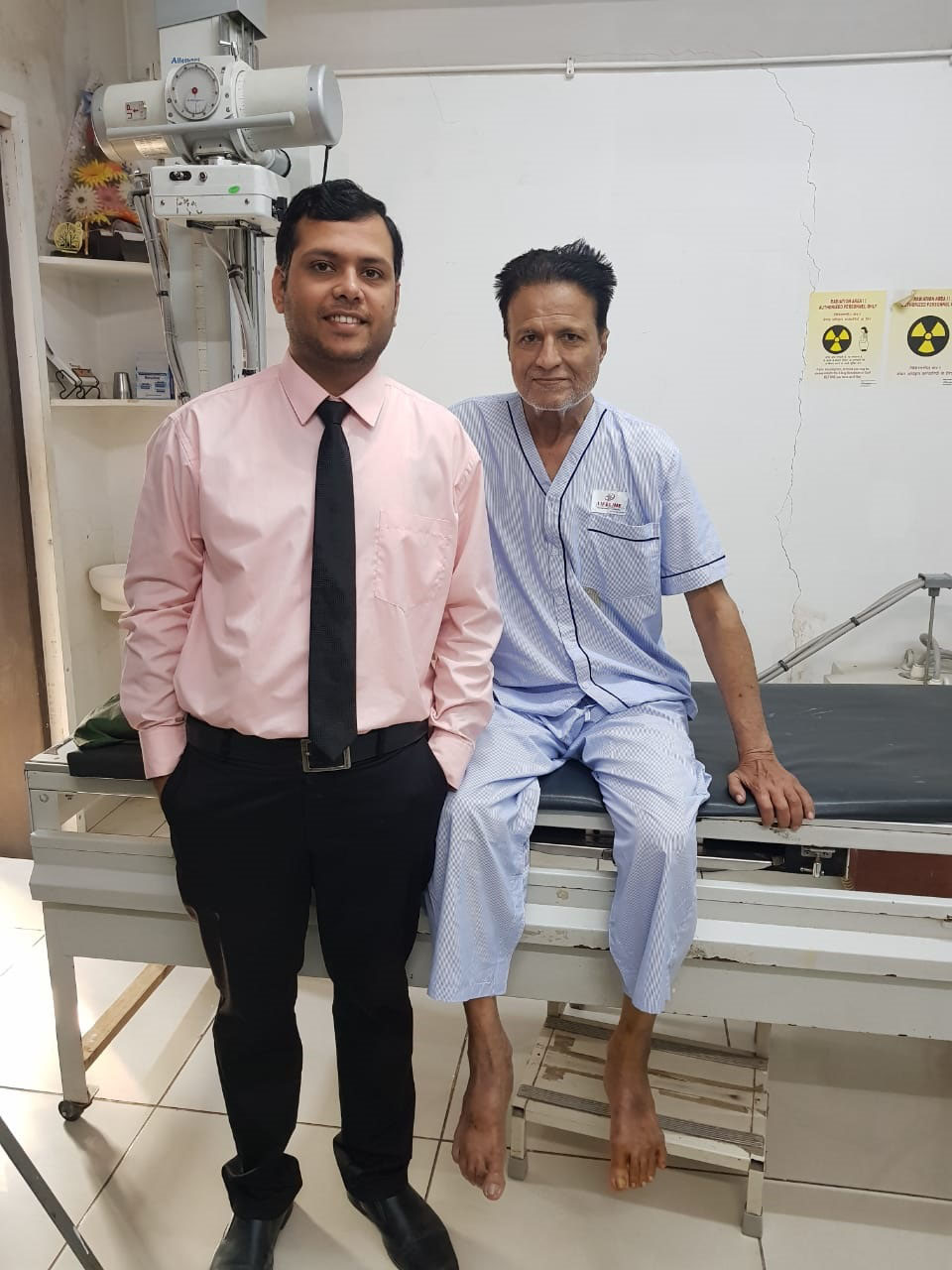
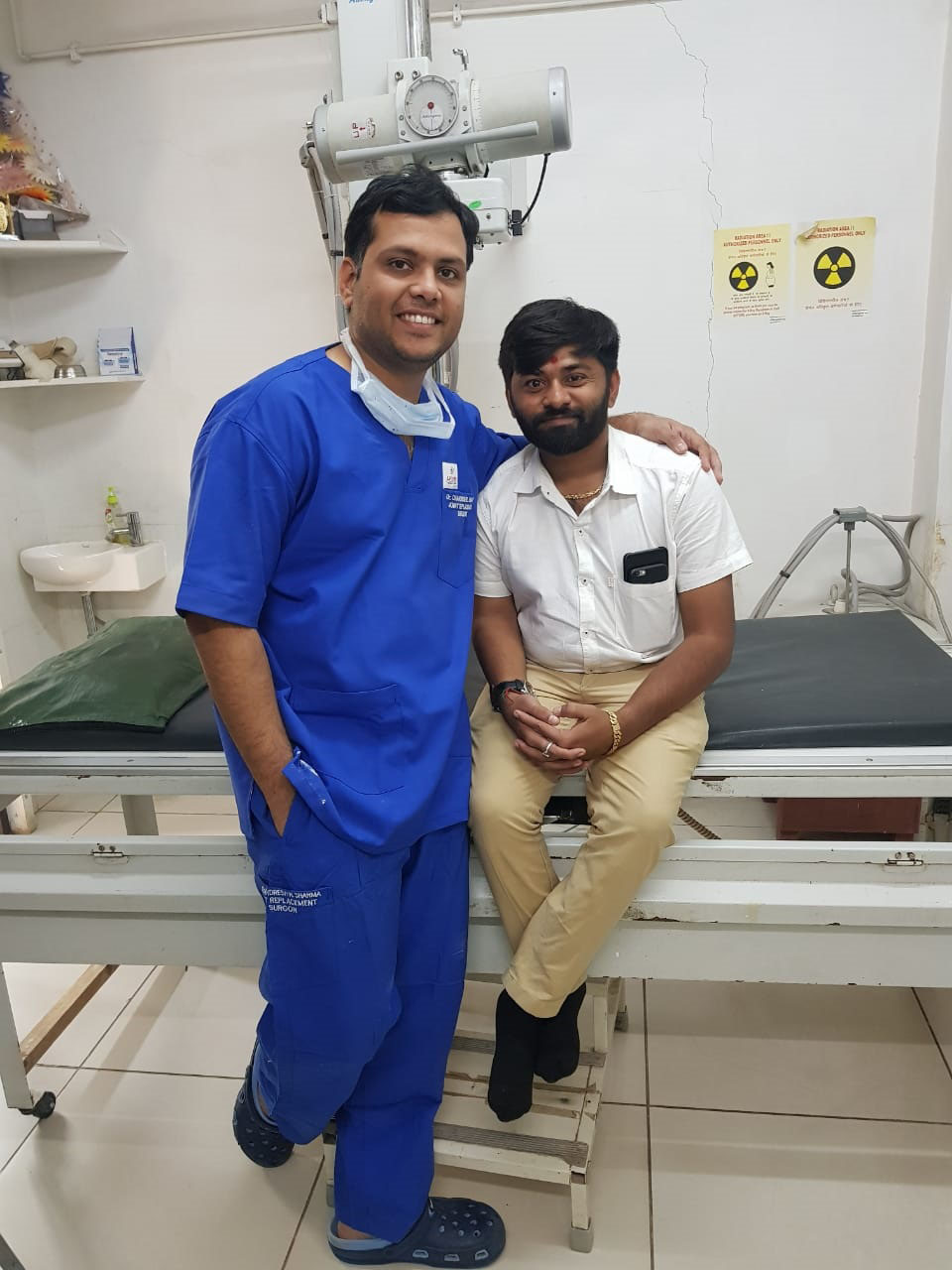
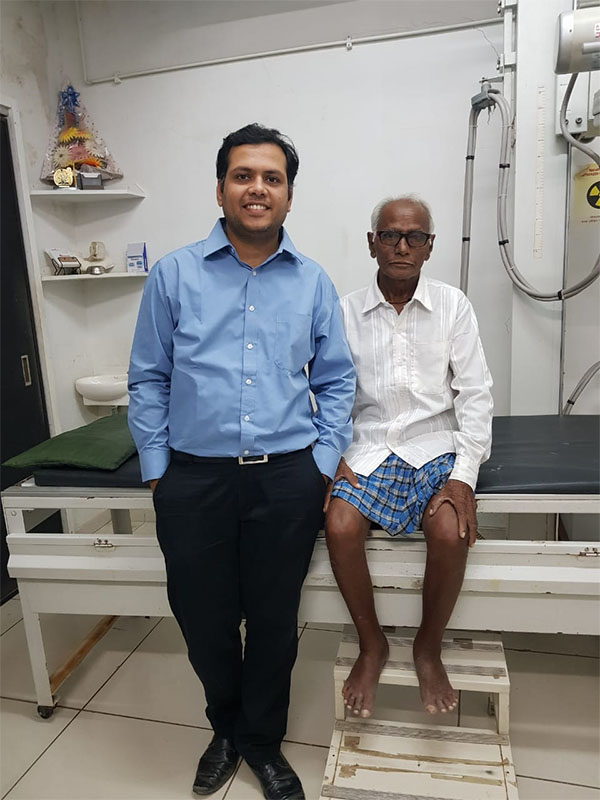
Before and after results of hip replacement cases treated at Lifeline Hospital. Tap any photo to view it full size.
Bring your reports and X-rays to the OPD at Lifeline Hospital, Ahmedabad. Monday to Saturday, 10 AM to 1 PM and 6 PM to 8 PM.